
Seborrheic Dermatitis Shampoo: What to Look For (and What to Avoid)
DRAFT, For James Washington’s review. Do not publish or schedule until approved.
Choosing a shampoo for a dry, itchy, or flaky scalp can be difficult. Some flakes are linked to seborrheic dermatitis; others may be product residue, dryness, or a different scalp condition. The right approach is to look for a product that fits the concern, cleanse gently, and follow its label directions consistently.
This guide covers what to look for in a seborrheic dermatitis shampoo, what may aggravate irritation, and how supportive scalp care fits into a routine. It is general information, not a diagnosis.
Start With the Pattern of Flaking
Seborrheic dermatitis commonly involves recurring itch and visible flakes. Scale may look white or yellowish and can appear greasy, particularly around areas with more oil. It may also affect the eyebrows, sides of the nose, or other areas.
Product buildup can look different. Styling products, dry shampoo, or conditioner may leave sticky, waxy, or clumped residue on the hair and scalp. A gentle, thorough wash may help remove it. However, appearance alone cannot confirm the cause, and buildup can coexist with scalp irritation.
If flaking continues despite careful cleansing, or symptoms worsen, a healthcare professional can help clarify what is contributing to it.
What to Look for in a Seborrheic Dermatitis Shampoo
A labeled active ingredient when treatment is needed
Some medicated shampoos contain ingredients intended to help manage dandruff or seborrheic dermatitis. Depending on the product and local labeling, these may include ketoconazole or selenium sulfide. Follow the directions on the specific package; active ingredients, schedules, and contact times differ.
For example, NHS guidance for ketoconazole shampoo describes applying it to the scalp, leaving it on for 3–5 minutes, then rinsing. That direction applies to ketoconazole products, not automatically to every shampoo. Follow the label or your clinician’s advice.
Gentle cleansing for regular use
A shampoo that cleans the scalp without leaving it feeling tight or stripped may be easier to use consistently. For sensitive scalps, look for a gentle, sulfate-free cleanser and consider avoiding products that repeatedly cause burning or increased redness. “Gentle” describes how a formula is intended to feel; it does not guarantee that every ingredient will suit every person.
Supportive hydration
Humectants such as glycerin help attract and retain water in the skin. Colloidal oat is another ingredient often used in products designed for dry or sensitive skin. These ingredients support comfort and hydration, but they are not substitutes for a medicated active when one is needed.
A routine you can follow
Consistency matters more than aggressive scrubbing. Wet the scalp, apply shampoo to the scalp rather than only the hair, and massage gently with fingertips. Rinse thoroughly. If it is a medicated shampoo, use it as often and for as long as the label instructs. Do not leave it on longer or use it more frequently in an effort to speed results.
What to Avoid
Harsh or overly stripping routines
A strong cleanser or frequent clarifying washes may leave a sensitive scalp feeling drier or more uncomfortable. Avoid vigorous scrubbing, scratching, and lifting scale with fingernails. These habits can further irritate the skin.
Unnecessary product layering
Using multiple medicated shampoos, exfoliating scalp products, or fragranced treatments at once can make it harder to identify what is helping or irritating. Introduce products thoughtfully and check with a clinician or pharmacist before combining treatments, especially if the scalp is already inflamed.
Ignoring a reaction
If a product consistently causes burning, a rash, or increased redness or itching, stop using it and seek professional advice. Fragrance and other hair-care ingredients can trigger irritation or contact reactions in some people. Rinse products fully, including around the hairline, ears, and neck.
Seborrheic Dermatitis or Scalp Psoriasis?
These concerns can look similar, and sometimes they overlap. Seborrheic dermatitis often presents with finer or oilier scale. Scalp psoriasis may involve thicker, drier scale and more clearly defined plaques. Psoriasis can also extend beyond the hairline or affect other areas, such as elbows, knees, or nails.
A scalp psoriasis treatment plan may differ from care for seborrheic dermatitis. Shampoo alone may not be enough, so persistent, thick, painful, or spreading patches should be assessed by a healthcare professional. See the Mayo Clinic overview of scalp psoriasis for more information.
A Supportive Scalp-Care Routine
A practical routine can pair targeted cleansing with comfortable conditioning. Keep conditioner mainly on the hair lengths if applying it directly to the scalp seems to increase residue or discomfort. Rinse thoroughly and avoid picking at scale.
For dry itchy scalp treatment, gentle cleansing and barrier-supporting hydration may help maintain comfort. But ongoing itch or flaking can have several causes, so persistent symptoms deserve professional assessment.

The KitiKiti Legacy Scalp & Skin Treatment Line
KitiKiti’s Legacy Scalp & Skin Treatment Line is designed to support scalp comfort and routine care. Its product options include aloe-focused cleansing, conditioners, and leave-on scalp treatments. Product names and details are available on each listing; check the label for the current ingredient list and directions.
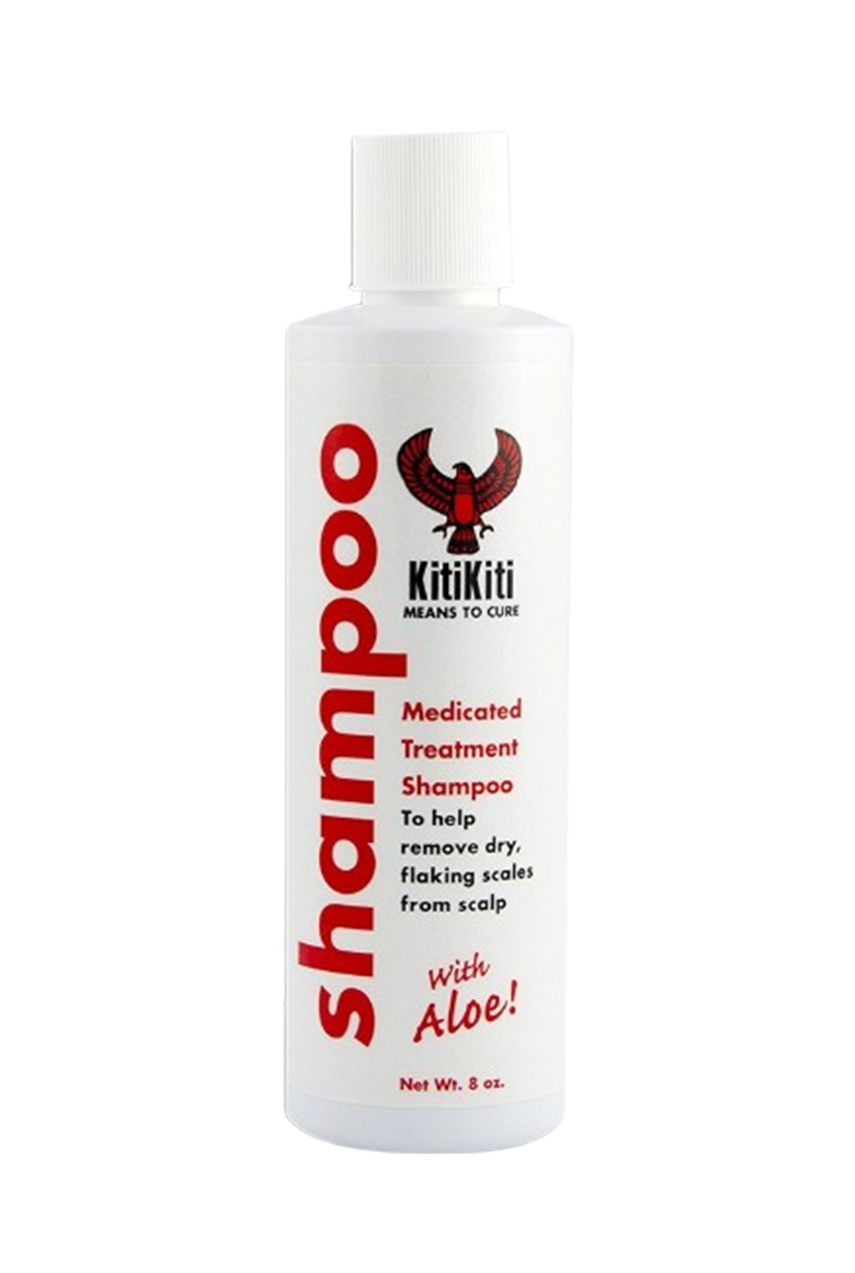
- Medicated Treatment Shampoo: A shampoo with aloe, listed to help remove dry, flaking scales from the scalp.
- Moisture Replenishing Conditioner (Conditioner I): A conditioning option for a routine focused on moisture and scalp comfort.
- Balancing Conditioner: A second conditioner option in the line, described for oily or compromised scalp care.
- Scalp & Skin Treatment, Standard: A non-oily leave-on treatment option.
- Scalp & Skin Treatment, Maximum Strength: A separate treatment option with vitamins and aloe.
These products are not a substitute for a diagnosis or prescribed care. If symptoms are severe, persistent, or worsening, consult a healthcare professional.

Medical Disclaimer
This article is for general educational purposes only and does not provide medical advice, diagnosis, or treatment. Seborrheic dermatitis, psoriasis, allergic reactions, and other scalp conditions can have overlapping symptoms. Follow the directions on any product label and consult a qualified healthcare professional for persistent or worsening symptoms, uncertainty about the cause, or questions about treatment.